The Ultimate Running Sole Guide
Finding the perfect running shoe is a lot like dating—you have to try a few before you find ‘the one.’ Comfort, support, and durability matter, but sometimes, you just have to go with the one that makes your heart (and feet) happy! Whether you’re in it for a long-term commitment (marathon training) or just a casual fling (occasional jogs), the right pair will keep you moving forward.
Just like relationships, running shoes come in all shapes and types—some are built for speed, some for endurance, and others for stability. And, of course, there are those flashy race-day pairs that might not be the most reliable for everyday runs but are thrilling while they last.
Shoe Tech.
Running shoes, much like relationships, are designed with specific qualities in mind. Some are cushioned and forgiving, others firm and responsive, but ultimately, it’s all about finding the perfect match for your needs.
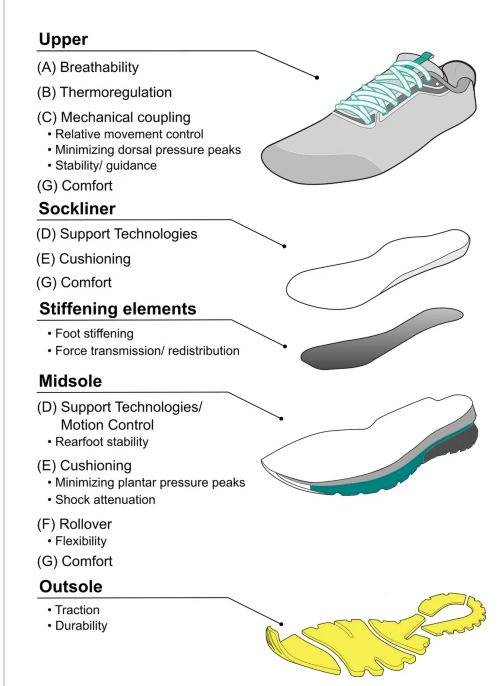
1. Anatomy of a Running Shoe
Upper
The part of the shoe covering the foot—think of it as the personality of the shoe. Some are breathable and lightweight, while others offer a snug, supportive hug.
Midsole
The cushioning layer between the upper and outsole, often made of EVA, TPU, or PEBA foams. This is the shoe’s ’emotional intelligence’—how well it absorbs impact and keeps you comfortable.
- EVA Foam: A widely used cushioning material known for its lightweight and shock-absorbing properties. EVA provides a soft, plush feel but may compress over time, leading to a loss of responsiveness. This makes it a great choice for everyday training shoes but less ideal for long-term durability.
- TPU Foam: TPU is more durable and resistant to compression compared to EVA. It offers better energy return, making it popular in shoes that require a balance of cushioning and responsiveness. Many stability and long-distance running shoes feature TPU for its longevity and ability to maintain structure over extended use.
- PEBA Foam: The lightest and most responsive of the three, PEBA is commonly found in high-performance and racing shoes. It provides excellent energy return and a bouncy feel, which enhances speed and efficiency. Shoes like the Nike Vaporfly use PEBA-based ZoomX foam to maximize propulsion and minimize fatigue over long distances.
- Stack Height: The total amount of cushioning material between your foot and the ground. Higher stack heights provide more cushioning but may reduce ground feel, while lower stack heights offer better responsiveness and control.
- Heel-to-Toe Drop: The height difference between the heel and the forefoot, typically ranging from 0mm (barefoot feel) to 12mm (traditional road shoes).
- Advantages of High Heel-to-Toe Drop (8-12mm):
- Reduces strain on the Achilles tendon.
- Ideal for heel strikers and runners prone to calf or Achilles injuries.
- Provides extra cushioning and comfort for long-distance runs.
- Disadvantages of High Heel-to-Toe Drop:
- May contribute to knee pain by shifting impact forces upwards.
- Can discourage natural foot motion and forefoot striking.
- Advantages of Low Heel-to-Toe Drop (0-6mm):
- Encourages a midfoot or forefoot strike, reducing impact on the knees.
- Strengthens foot muscles and improves running mechanics over time.
- Preferred by runners transitioning to minimalist running styles.
- Disadvantages of Low Heel-to-Toe Drop:
- Increases strain on the Achilles tendon and calf muscles.
- Requires a gradual transition to prevent injuries.
- Advantages of High Heel-to-Toe Drop (8-12mm):
- Legal Stack Height: According to World Athletics regulations, the maximum stack height allowed for competition shoes is 40mm for road races and 25mm for track events. This ensures fair competition while still allowing for advancements in cushioning technologies.
Outsole: The Foundation of Your Sole Mate
Just as different relationships thrive on different foundations, the outsole of your running shoe depends on the type of surface you run on. Whether you’re pounding the pavement, sprinting on the track, or conquering trails, the right outsole ensures durability, grip, and smooth transitions.
Surface Types & Outsole Needs:
- Road Running: Smooth, shock-absorbing rubber outsoles provide a balance of grip and durability.
- Track Running: Minimalist, lightweight outsoles with excellent traction for speed and precision.
- Trail Running: Rugged, high-traction outsoles with deeper lugs for grip on dirt, rocks, and mud.
Outsole Technologies by Brand:
- Nike:
- Durable Rubber Compound: Enhances grip and longevity.
- Duralon Blown Rubber: Improves traction and flexibility in forefoot areas.
- Waffle Outsole: A signature pattern designed for multi-surface grip and durability.
- Asics:
- ASICSGRIP™: Advanced rubber compound designed for superior traction, particularly in trail shoes.
- AHAR & AHAR+ (Asics High Abrasion Rubber): Highly durable material used in high-wear areas to extend shoe lifespan.
- Hybrid ASICSGRIP™: Found in some models to provide an optimal blend of road and trail capabilities.
- Saucony:
- XT-900 Rubber: A high-durability outsole material that offers exceptional traction and long-lasting wear.
- PWRTRAC Rubber: Used in trail running shoes, delivering superior grip and adaptability on rocky and muddy surfaces.
- Tri-Flex Design: Provides flexibility and enhanced ground contact for smoother transitions.
2. Key Running Shoe Technologies
Each brand has its own approach to making the perfect running shoe, much like different personalities in dating.
Nike: The Trendy Heartthrob
- ZoomX Foam: Lightweight and exciting, perfect for high-energy moments.
Example Models: Nike Vaporfly 3, Nike Alphafly 3 - React Foam: Reliable and cushioned—always there when you need support.
Example Models: Nike Pegasus 41, Nike Infinity Run 5 - Flyknit Upper: Stylish and breathable, much like that effortlessly cool date.
Example Models: Nike Vaporfly 3, Nike Epic React
Asics: The Dependable Partner
- Gel Cushioning: Absorbs impact and keeps things smooth—kind of like someone who always knows what to say.
Example Models: Asics Gel-Nimbus 27, Asics Gel-Kayano 31 - FlyteFoam Technology: Lightweight but full of energy return—reliable but exciting.
Example Models: Asics Novablast 5, Asics Metaspeed Sky Paris - Trusstic System: Enhances stability—no surprises here, just steady support.
Example Models: Asics GT-2000 12, Asics Gel-Kayano 31
Saucony: The Adventurer
- PWRRUN+ Midsole: Soft, springy, and full of life—like someone who always has new experiences planned.
Example Models: Saucony Triumph 22, Saucony Endorphin Speed 4 - SpeedRoll Technology: Smooth transitions, making everything feel effortless.
Example Models: Saucony Endorphin Pro 4, Saucony Kinvara 15 - FORMFIT Upper: A personalized fit—like that rare person who just gets you.
Example Models: Saucony Guide 17, Saucony Peregrine 14
3. Plates: The Commitment Factor
- Carbon Plates: Introduced in 2017 with the Nike Vaporfly 4%, carbon plates revolutionized distance running by improving energy return and reducing fatigue. The stiff plate works with responsive foam to create a propulsion effect, increasing efficiency and reducing effort over long distances.
- Performance Data: Studies have shown that carbon-plated shoes can improve running economy by 4% or more, leading to faster marathon times. The introduction of carbon plates has contributed to record-breaking performances in races, with elite runners benefiting from improved biomechanics and reduced muscle strain.
- Example Models: Nike Alphafly 3, Asics Metaspeed Sky Paris, Saucony Endorphin Pro 4
- Nylon Plates: Unlike carbon plates, nylon plates provide a more flexible structure, delivering a balance of propulsion and comfort. They are often found in performance-oriented training shoes that require some stiffness but not the extreme rigidity of carbon plates.
- Advantages: Nylon plates enhance speed without compromising comfort, making them ideal for runners who need a smooth transition between training and racing.
- Example Models: Saucony Endorphin Speed 4, Nike Zoom Fly 6
Matching with Your Running Relationship Goals
1. Daily Trainers: The Steady and Reliable Partner
Versatile and durable, these shoes are designed for easy runs and daily mileage. They provide a good balance of cushioning, support, and longevity—like a dependable long-term relationship.
- Nike Pegasus 41 – A reliable all-rounder with soft React foam for comfort.
- Asics Gel-Nimbus 27 – Well-cushioned with Gel technology for impact absorption.
- Saucony Ride 17 – A smooth and stable daily trainer ideal for all runners.
2. Speed/Tempo Shoes: The Energetic Flirt
Lighter and more responsive than daily trainers, these shoes are ideal for faster workouts, including interval training, tempo runs, and threshold workouts. They bring excitement to training days, making every run feel like an adventure.
- Nike Zoom Fly 6 – Nylon-plated for enhanced propulsion during fast efforts.
- Asics Magic Speed 2 – Low stack and energetic FlyteFoam Blast+ cushioning.
- Saucony Endorphin Speed 4 – Nylon plate provides an excellent balance between speed and comfort.
3. Racing Shoes: The High-Speed Romance
Designed for competition, these shoes are built with carbon plates and lightweight materials to maximize speed and efficiency. They are best suited for race days and personal best attempts—like that thrilling, whirlwind romance.
- Nike Alphafly 3 – Ultra-responsive ZoomX foam with Air pods for maximum propulsion.
- Asics Metaspeed Sky Paris – Carbon-plated shoe optimized for stride-length efficiency.
- Saucony Endorphin Pro 4 – SpeedRoll technology with a carbon plate for an aggressive toe-off.
4. Trail Shoes: The Rugged Adventurer
Built for rugged terrain, these shoes offer enhanced grip, protection, and stability for off-road running. They are made for those who love exploring uncharted paths and embracing the wild side of running.
- Nike Wildhorse 8 – Durable traction with responsive cushioning for technical trails.
- Asics Trabuco Max 3 – High-stack cushioning and rock plate for extra protection.
- Saucony Peregrine 14 – PWRTRAC outsole for aggressive grip on varied terrain.
5. Stability vs. Neutral Shoes: Finding the Right Fit
Stability Shoes: The Supportive Partner
Designed for runners who overpronate (excessive inward foot rolling), these shoes offer extra arch support and motion control. If you need a strong and steady presence in your running life, these are for you.
- Nike Structure 25 – A blend of React foam with a supportive medial post for stability.
- Asics Gel-Kayano 31 – A trusted stability model with dynamic support.
- Saucony Guide 17 – A lightweight stability shoe with excellent comfort.
Neutral Shoes: The Free Spirit
For runners with a natural gait who don’t require extra support. These shoes let you run freely while still offering plush cushioning and comfort.
- Nike Invincible 4 – Maximum cushioning with a soft and responsive feel.
- Asics Gel-Cumulus 26 – Balanced cushioning for a smooth ride.
- Saucony Triumph 22 – Luxurious comfort for high-mileage neutral runner
Running Shoe Sizing: Finding the Right Fit
Selecting the correct running shoe size is crucial for comfort, performance, and injury prevention. Wearing shoes that are too tight can lead to blisters, black toenails, and discomfort, while oversized shoes can cause instability and foot fatigue. Understanding the nuances of running shoe sizing will help you make the best choice for your feet.
Understanding Running Shoe Sizing
Running shoes are typically available in three main sizing standards:
- US Sizing: Common in North America, used by brands like Nike, Brooks, and Saucony.
- UK Sizing: Used by brands like Inov-8 and some European-based manufacturers.
- EU Sizing: Commonly used in European brands such as Salomon and Adidas.
Different brands may have slight variations in their size charts, so always refer to the specific brand’s sizing guide when purchasing.
Men’s vs. Women’s Running Shoe Sizing
Men’s and women’s running shoes are designed differently to accommodate anatomical differences. Women’s shoes generally have a narrower heel and a slightly lower overall volume. In contrast, men’s shoes tend to be wider and offer more room in the forefoot.
Running Shoe Widths
Many brands offer width options to ensure a better fit. Here’s a general guide to the standard width classifications for men and women:
| Width Category | Men’s Width Label | Women’s Width Label |
|---|---|---|
| Narrow | B | AA |
| Standard | D | B |
| Wide | 2E | D |
| Extra Wide | 4E | 2E |
If you have wider feet, opting for a wide or extra-wide version can prevent discomfort and pressure points.
Tips for Finding the Right Fit
- Consider Toe Space: Your toes should have about a thumb’s width of space from the shoe’s front to prevent cramping, especially for long runs when feet tend to swell.
- Check for Heel Slippage: If your heel moves excessively, consider a smaller size or a different lacing technique to secure the fit.
- Try Shoes in the Evening: Feet swell throughout the day, so trying shoes in the evening or after a workout mimics their expanded state during a run.
- Test with Running Socks: Wear the socks you typically run in to get an accurate fit.
- Walk and Jog in the Shoes: If possible, try a short jog in the store or on a treadmill to assess comfort and fit.
When to Size Up or Down
- Size Up if you experience toe cramping or your toes touch the front of the shoe.
- Size Down if there is excessive movement inside the shoe, causing instability or heel slippage.
In the end, finding your ‘sole’ mate is about discovering the perfect match—one that fits your needs, supports you through highs and lows, and keeps you moving forward. Whether you’re looking for a lifelong partner or a thrilling short-term affair, the right shoe is out there waiting for you!
